General13 min read
9 Best AI Creative Analytics Tools for D2C Brands in 2026
A practical comparison of AI creative analytics tools for D2C brands, creative scoring, competitor intelligence, generation, and cause diagnosis.
A practical comparison of AI creative analytics tools for D2C brands, creative scoring, competitor intelligence, generation, and cause diagnosis.
Creative analytics tools have converged. Almost all of them now tag your ads, score your hooks, flag fatigue, and watch your competitors. The differences that used to matter — which platforms, how fast, how many formats — have mostly closed.
What still separates them is what they can see beyond the ad account.
Our top three for D2C brands in 2026: Clevrr AI for tying creative performance to actual revenue and inventory, Motion for turning performance data into reports creative teams will read, and Crux for mining customer objections into new angles. Below, all ten compared — plus the one question that actually decides which you should buy.
AI creative analytics software connects to your ad accounts, breaks your creative into analysable components — hook, visual, copy, CTA, format, offer — and identifies which of those components correlate with performance.
The better tools go further in one of two directions. Some close the loop forward into generation, producing new creative from winning patterns. Others close it backward into diagnosis, checking whether an ad's decline was actually caused by the creative or by something downstream: stock, pixel health, audience overlap, landing page.
That fork — forward into production, backward into cause — is the real dividing line in this category, and it's how the list below is organised.
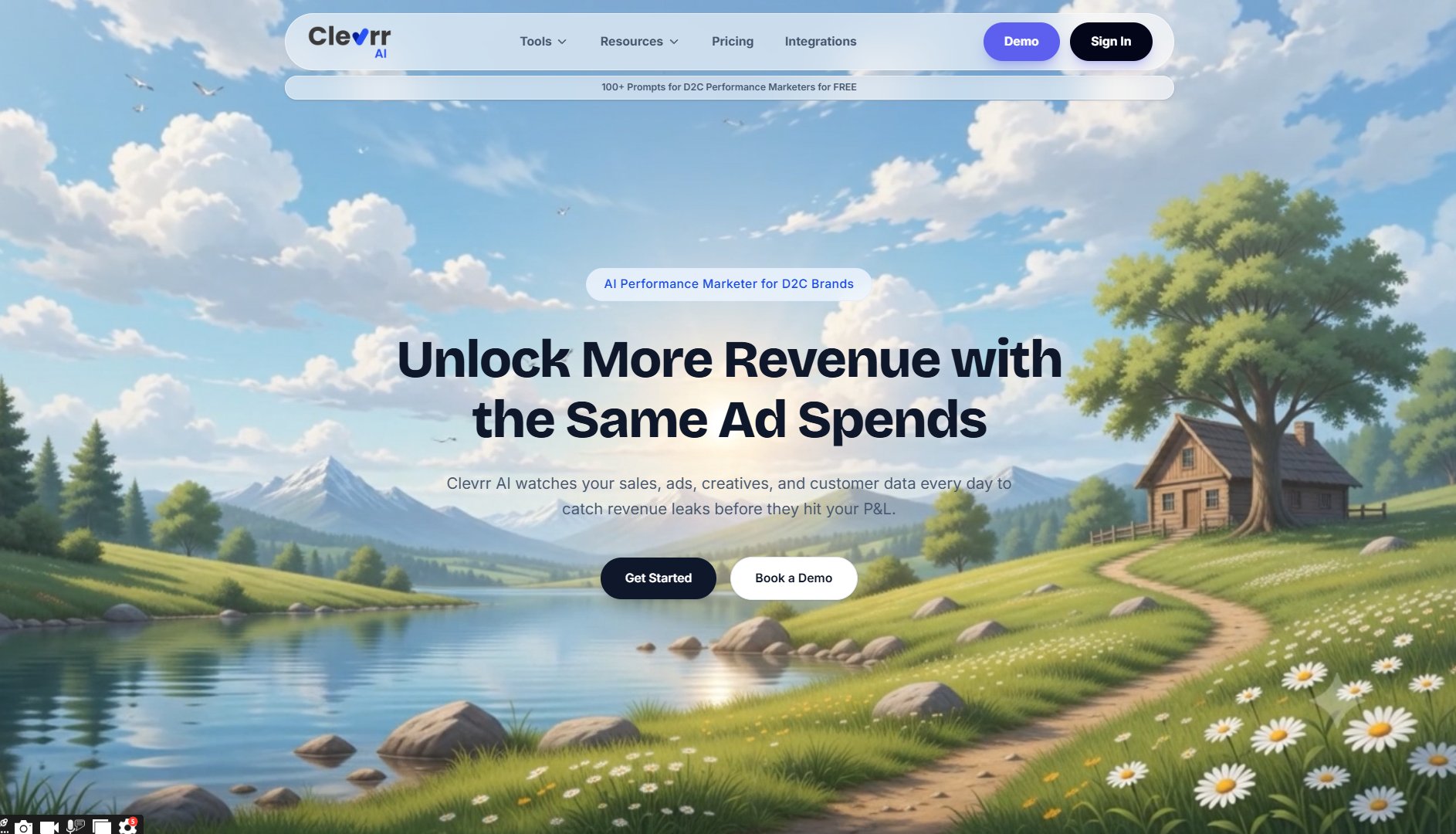
Clevrr AI is the only tool in this comparison that evaluates creative performance against commerce data rather than ad-platform metrics alone. Meta and Google creative data sits alongside Shopify orders, Amazon Seller Central inventory, Razorpay payments, and Shiprocket/Delhivery fulfilment — so when an ad's numbers fall, Clevrr can distinguish a tired creative from a stocked-out SKU, a broken pixel, or the same customer seeing the ad six times.
Key capabilities
What it catches that ad-platform tools can't: ad spend continuing after a stockout, silent pixel failures on hero SKUs, retargeting budget landing on customers who already purchased, and frequency drift from audience overlap — all of which look identical to creative fatigue inside Meta Ads Manager.
Best for: D2C brands running multi-platform spend who keep rebriefing creative that turns out not to have been broken.
Honest limitation: Clevrr AI does not generate or produce creative, and doesn't do element-level hook/CTA scoring. Pair it with a generation tool if that's what you need.
Pricing: Not publicly listed — book a demo.
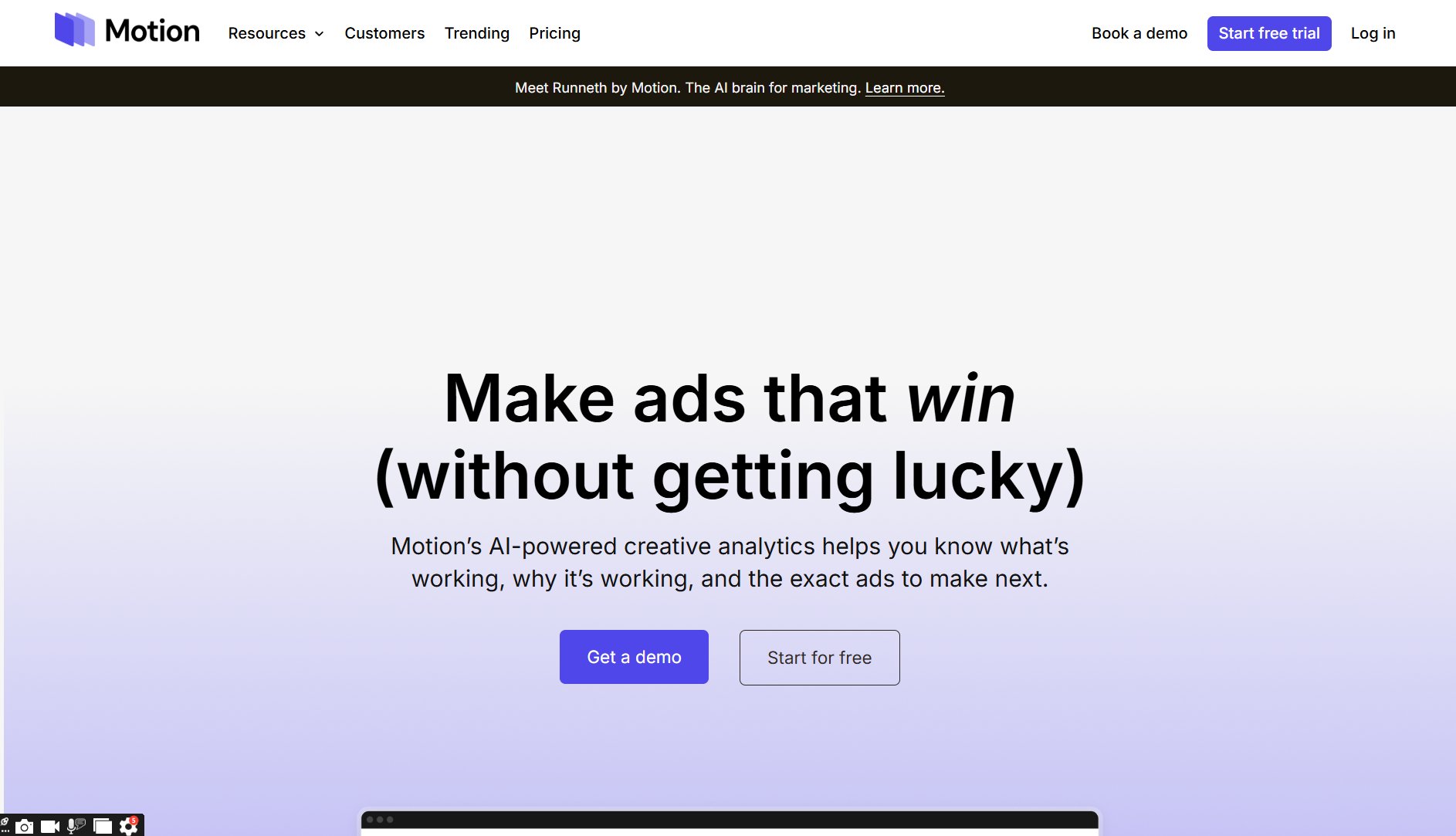
Motion groups ads by shared attributes and turns performance data into visual reports built for creative teams rather than media buyers, so learnings actually reach the person making the next ad.
Limitation: Reporting only — no generation, production, or diagnosis of non-creative causes. No public pricing or integration list.
Best for: Teams where creative and performance sit in separate rooms and insights get lost between them.
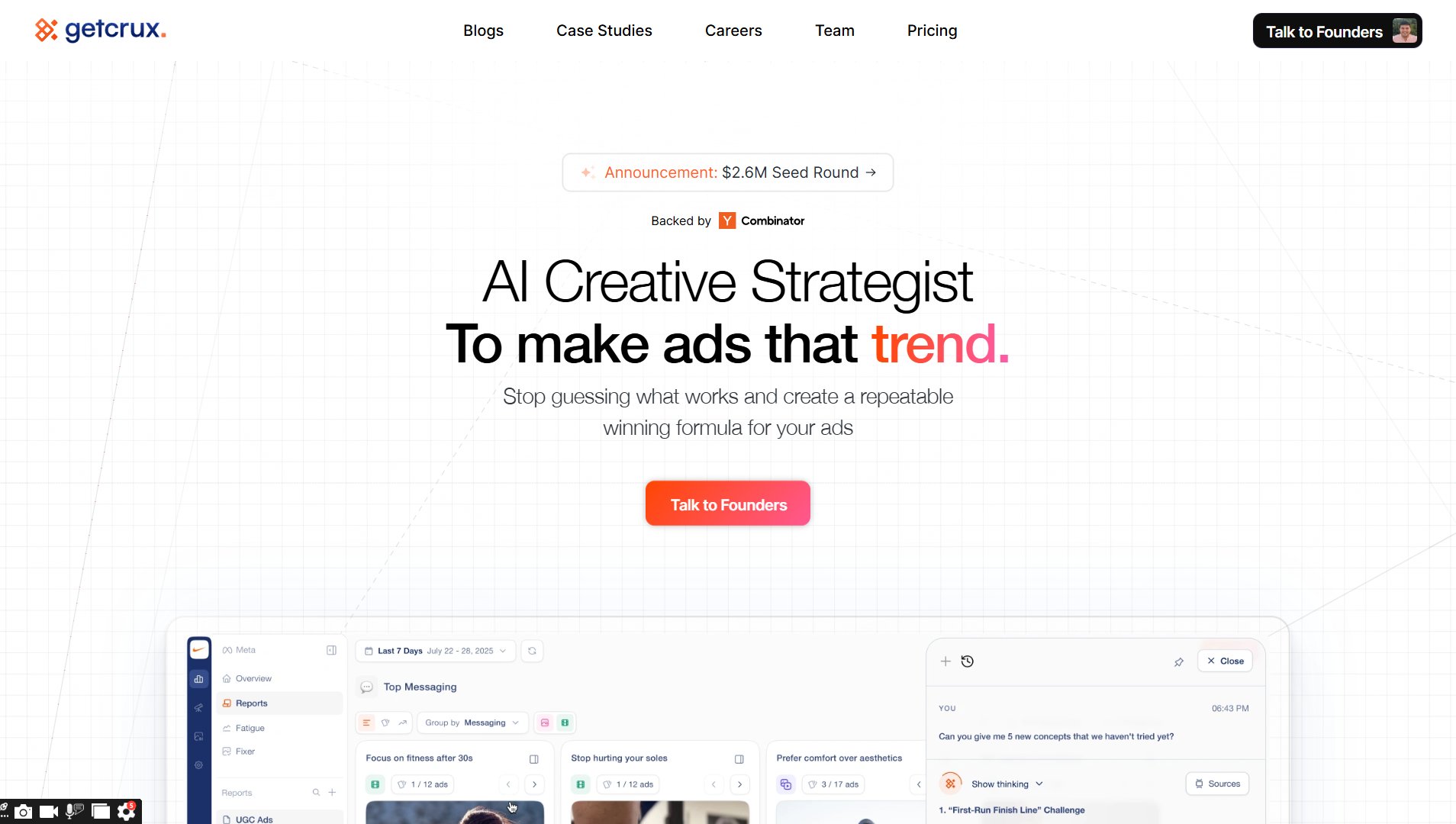
Crux's AI Audience Analyzer scans comments, reviews, and competitor ads to surface customer objections, then converts them into creative angles — an input drawn from what customers say, not just from ads you've already run. It also generates creative, checks brand compliance, and auto-publishes.
Limitation: Analyses creative in isolation from commerce-side factors. Paid pricing requires a call with founders.
Best for: Teams who've exhausted their angle list and need a research-driven way to find more. A genuine free tier makes it easy to test.
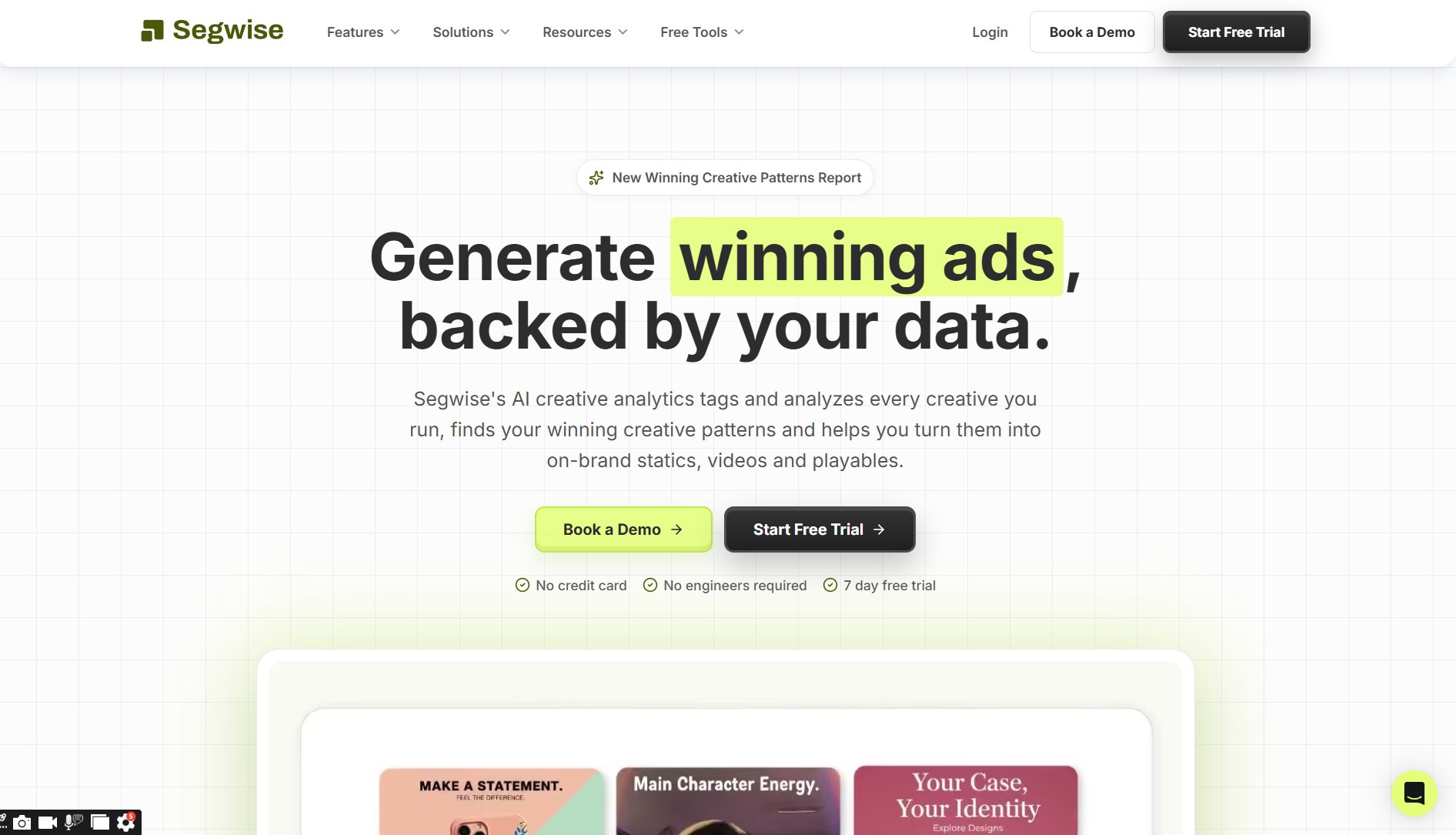
Segwise auto-tags video, image, and playable creative across 15+ ad networks — including AppLovin, Unity, Mintegral, and Moloco, which most tools skip — and generates new ads from winning patterns.
Limitation: Roots in mobile gaming and app install; pure e-commerce brands won't use the MMP depth. No public pricing.
Best for: Brands running creative across many networks, especially with mobile or app inventory in the mix. 7-day free trial, no credit card.
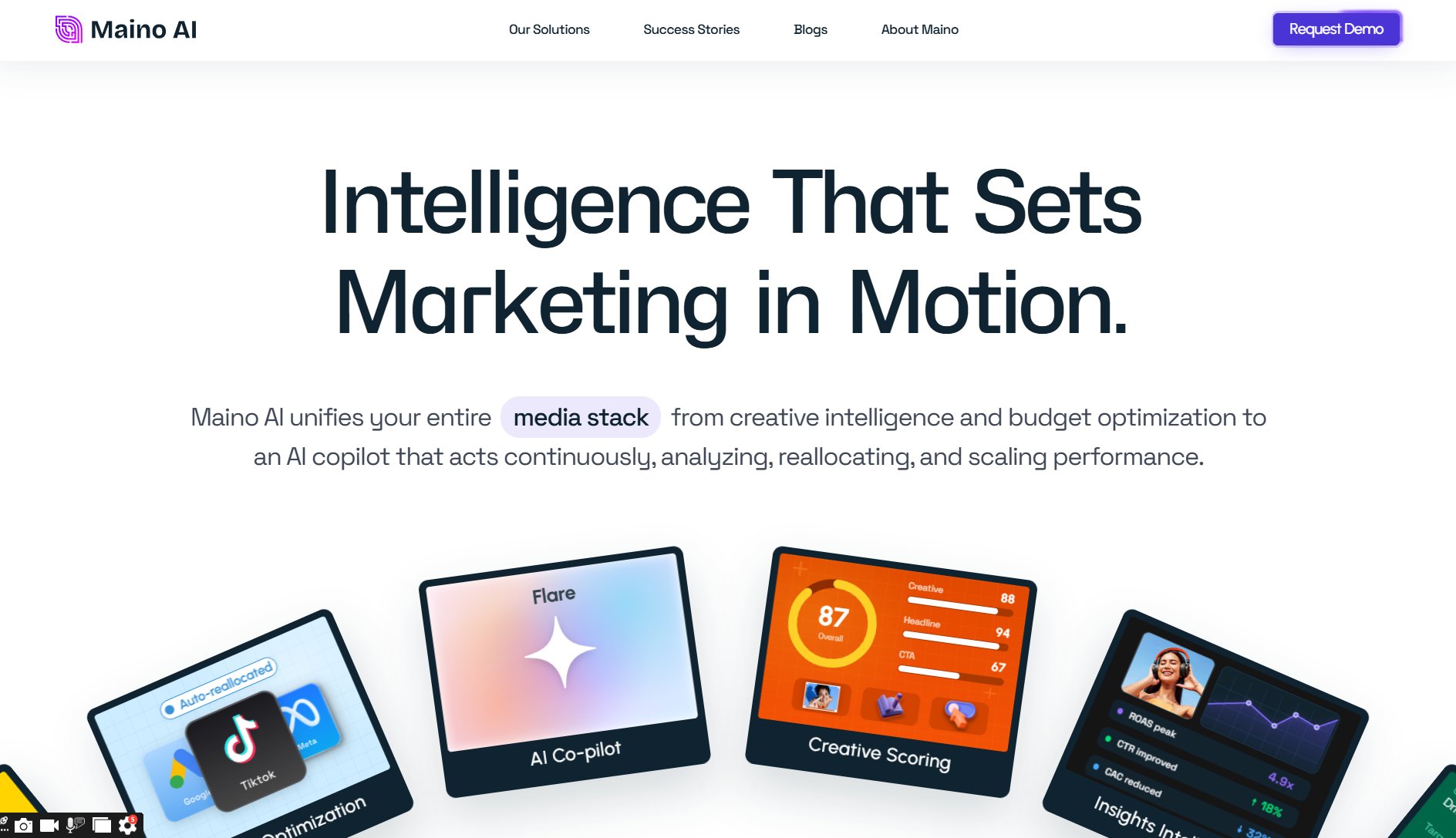
Maino scores creative by component — overall, headline, CTA — so output points at a specific element to fix rather than a general verdict. Fatigue detection, brief generation, and the Flare co-pilot round it out, across the widest platform list here including Amazon Ads.
Limitation: Broad rather than deep; each capability competes with a more specialised tool. Demo-gated pricing.
Best for: Brands running creative across four or more platforms who want scoring and budget decisions in one place.
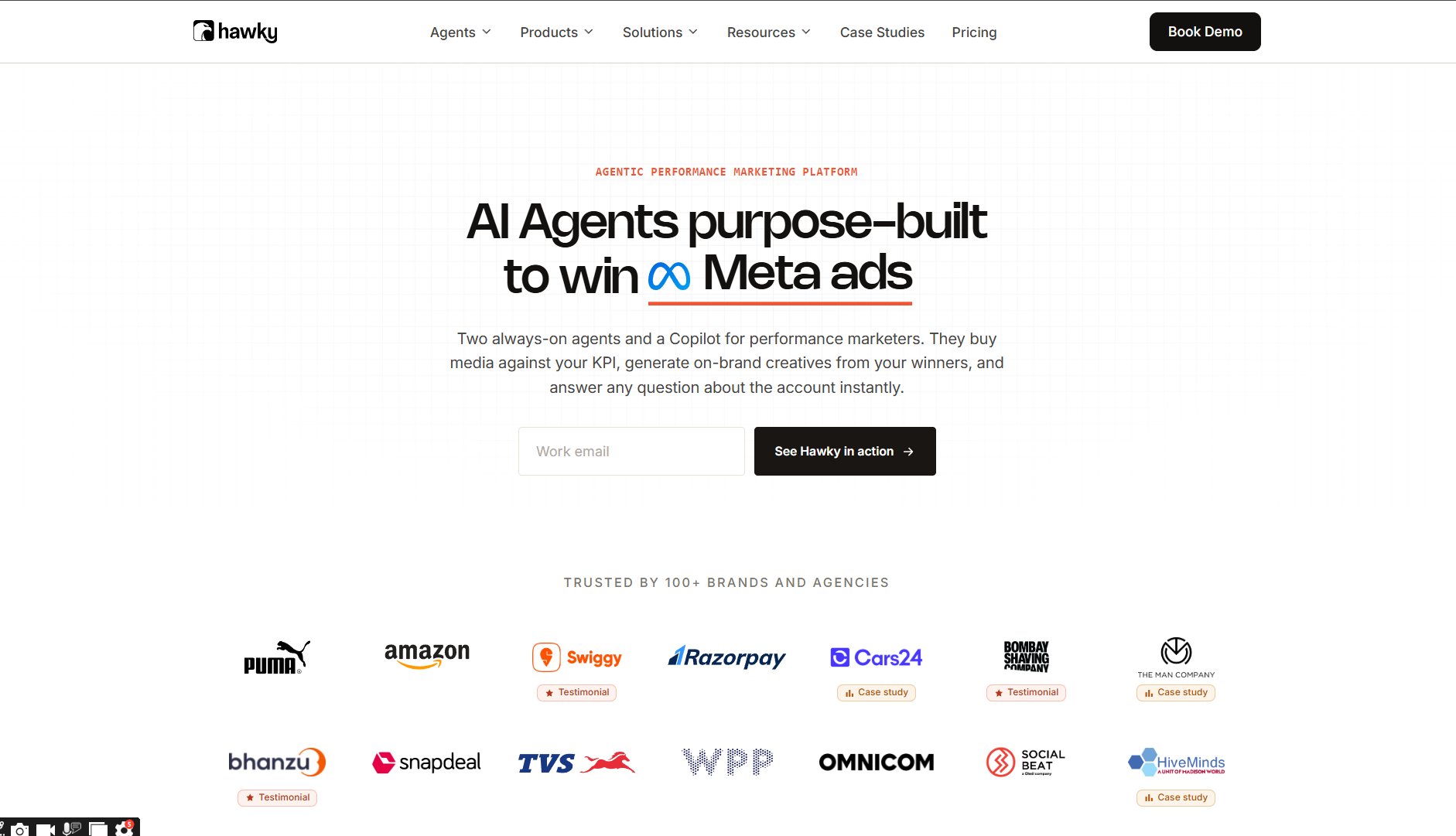
Hawky's Creative Agent generates on-brand variants weekly and routes them through approval, with element-level scoring of hooks, visuals, copy, and CTAs underneath. FeatherDB gives the agents persistent memory of brand guidelines and past winners.
Limitation: Bundled with autonomous media buying — more surface area than a creative-only team needs. KPI-linked pricing is harder to budget.
Best for: Teams who want the creative iteration loop running on a schedule rather than manually.
GoMarble's Brand IQ learns from your top-performing ads, landing pages, and customer data so creative analysis runs against your brand rather than generic benchmarks. Agent Governance controls access, limits, and approvals.
Limitation: Creative analysis is one part of a broader paid-media platform, not the core focus. Pricing not published.
Best for: Teams wanting creative analysis inside a governed paid-media workflow, with Shopify and Klaviyo connectors that fit D2C stacks.

Brushless turns briefs into on-brand variations across channels, sizes, languages, and personas — static and video — targeting under 24-hour turnaround, with brand and compliance rules enforced on every asset.
Limitation: Doesn't analyse performance at all. It executes briefs; it won't tell you what to brief. Service-shaped rather than self-serve.
Best for: Brands producing campaign creative at volume across multiple markets or languages.
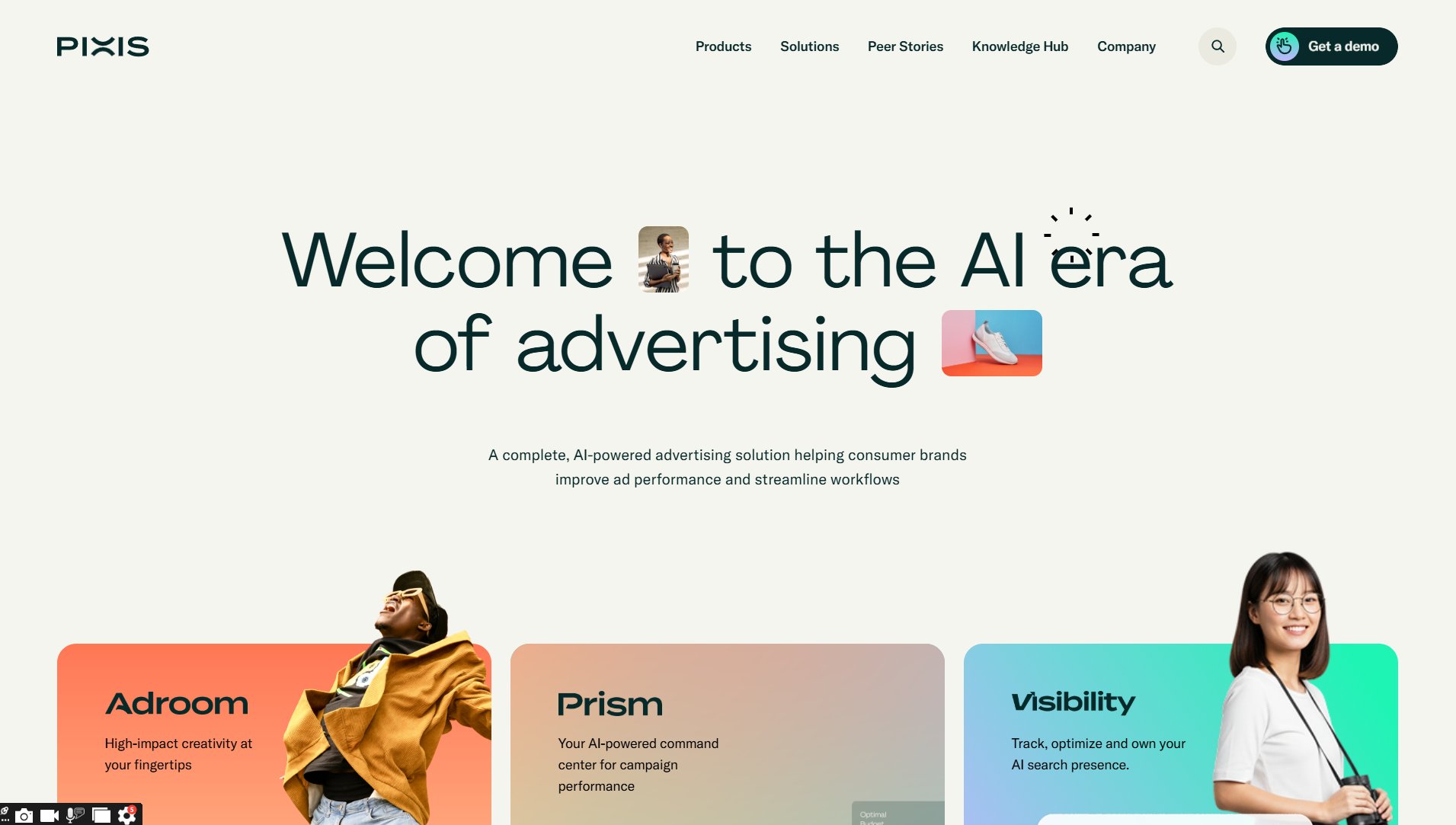
Pixis pairs Adroom for on-demand on-brand creative generation with Prism for outcome prediction, plus Visibility for tracking brand presence across 6+ AI search engines. Google Partner and Meta Business Partner status.
Limitation: Built for enterprise scale; likely more platform than an early-stage D2C brand needs. Demo-gated.
Best for: Larger consumer brands consolidating creative and performance tooling with one vendor.
| Tool | Core strength | Commerce & inventory aware | Generates creative | Best for |
|---|---|---|---|---|
| Clevrr AI | Cause diagnosis | ✅ Full (Shopify, Amazon, Flipkart) | ❌ | Knowing if creative was the problem |
| Motion | Creative reporting | ❌ | ❌ | Creative-team enablement |
| Crux | Angle discovery | ❌ | ✅ | Finding new creative angles |
| Segwise | Cross-network tagging | ❌ | ✅ | Multi-network creative |
| Maino | Component scoring | ⚠️ Amazon Ads only | ⚠️ Briefs | Multi-platform scoring |
| Hawky | Element scoring + variants | ❌ | ✅ | Automated iteration |
| GoMarble | Brand-context analysis | ⚠️ Shopify connector | ❌ | Governed workflows |
| Brushless | Volume production | ❌ | ✅ | Localised production |
| Pixis | Enterprise generation | ❌ | ✅ | Enterprise consolidation |
Here's a pattern worth sitting with.
Ask any tool on this list why an ad's performance dropped, and it will answer from inside the ad account. Frequency is up. CTR is down. The hook is scoring lower than your top quartile. All true, all useful, and all built on one assumption: that the creative is what changed.
Often it isn't.
The SKU in the ad went out of stock in one warehouse on Thursday. The pixel on that product page broke during a theme update and stopped firing. The audience has overlapped so heavily that 40% of impressions are landing on people who already bought. In every one of those cases, the creative metrics degrade in exactly the pattern that reads as fatigue — and a tool scoped to ad-platform data will tell you, confidently and incorrectly, to refresh the creative.
So the team refreshes the creative. Two weeks of production time. The numbers don't recover, because nothing was wrong with the ad.
This is why the useful question when comparing creative analytics tools in 2026 isn't "how well does it score creative?" — nearly all of them score creative well now. It's "what can this tool see when the creative isn't the answer?" Anything reasoning only from ad-platform data has a structural ceiling: it can describe the symptom precisely and still misdiagnose the cause, because the cause lives in a system it isn't connected to.
Production is getting cheaper every quarter. Scoring is table stakes. What's scarce is knowing which problem you actually have.
If your creative team never sees performance data in a usable form — Motion. It's narrow, and that's the point.
If you're out of creative angles — Crux. Objection mining pulls from a different well than your own ad history.
If you need volume across markets and languages — Brushless for production, Pixis if you want it inside a larger enterprise suite.
If you're running creative across many networks — Segwise for tagging breadth, Maino for scoring across the widest platform list.
If you want the iteration loop automated — Hawky, provided you're comfortable with its media-buying scope and variable pricing.
If you keep rebriefing creative that wasn't the problem — Clevrr AI. This is the diagnostic layer, not a replacement for the tools above.
Most D2C brands running serious spend end up with two: one that helps them make better creative, and one that tells them what's actually broken. The common mistake is buying two tools from the same stage and wondering why nothing improved.
What's the difference between creative analytics and creative automation software? Creative automation focuses on producing assets at scale — resizing, localising, generating variants. Creative analytics focuses on understanding which creative works and why. Most platforms now claim both, but nearly all are meaningfully stronger at one. Buy for the one you actually need.
Which creative analytics tools work with Amazon and Flipkart, not just Meta and Google? Clevrr AI integrates with Amazon Seller Central, Amazon Ads, and Flipkart. Maino covers Amazon Ads. Tools built primarily for Western D2C markets concentrate on Meta, Google, and TikTok and generally don't handle marketplace creative or inventory data.
How do I tell creative fatigue from a targeting or inventory problem? Rising frequency with declining CTR usually indicates genuine fatigue. Flat frequency with declining conversion usually points downstream — audience overlap, a landing page issue, or a stockout. Tools scoped to ad-platform data can't fully separate these, which is why cross-referencing against order and inventory data matters.
Do I need creative analytics if I'm spending ₹5-10 lakh a month? At that spend you typically have more creative volume than statistical signal. A tool that helps you produce and test faster — Crux's free tier, Segwise's trial — usually beats a deep analytics platform until data density catches up.
Can I run two of these tools at once? Usually yes, and often sensibly, since an analysis tool and a production tool cover different jobs. Be more careful running two platforms that both auto-adjust budget or auto-publish creative to the same ad accounts.
Join hundreds of D2C brands using Clevrr AI to automate their growth and efficiency.
Join 500+ D2C founders using Clevrr AI to automate their operations and scale faster.
Get Started Free
